Brain surgery in Brisbane. Explained by the neurosurgeon who performs it.
Dr Gert Tollesson is a specialist neurosurgeon in Brisbane. This site covers his brain practice only: what each condition is, what the options are, including not operating, and what to expect.
Greenslopes Private Hospital, Brisbane
Spring Hill, Toowoomba and Townsville, or telehealth
A current GP or specialist referral is needed
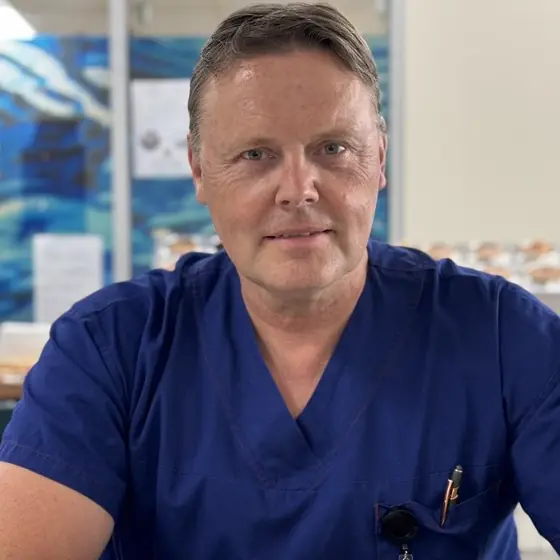
Dr Gert Tollesson, FRACSConsultant neurosurgeon since 2006
At a glance
Needed for a Medicare rebate.
GP referrals 12 months; specialist referrals 3 months.
Watkins Medical Centre, Spring Hill
Level 10, 225 Wickham Terrace. Monday to Friday, 8:30am to 4:30pm.
Greenslopes Private Hospital (adults)
Queensland Children’s Hospital (children)
Referrals by fax (07) 3236 9555
Start here
Start with the sentence that sounds most like you. Each page explains the condition, the options, including not operating, and what usually happens next.
If you are a patient, or the family of one
- I have been told I have a brain tumour.Gliomas, meningioma, metastases, pituitary and skull base tumours
- I have an aneurysm or a blood vessel problem in my brain.Aneurysms, arteriovenous malformations, cavernomas, moyamoya disease
- I have hydrocephalus, a cyst or a Chiari malformation.Fluid and pressure conditions, including shunt review
- I have severe facial pain, or a twitch on one side of my face.Trigeminal neuralgia, glossopharyngeal neuralgia, hemifacial spasm
- My child has been referred to a neurosurgeon.Paediatric neurosurgery at the Queensland Children’s Hospital
If you are a GP or specialist referring a patient
Referrals are accepted from general practitioners and specialists. Send the images, not just the report. Anything urgent is better phoned through than faxed.
- Fax(07) 3236 9555
- Phone(07) 3870 3708, Monday to Friday 8:30am to 4:30pm
- IncludeSymptoms and onset, examination findings, imaging with the images released, medications including anticoagulants (WorkCover requires pre-approval)
- UrgentNew focal deficit, first seizure, rapidly progressive symptoms or raised intracranial pressure: phone the rooms the same day
Brain conditions Dr Tollesson treats in Brisbane
Every condition page covers what it is, the symptoms it causes, how it is diagnosed, the treatment options including monitoring, and what recovery looks like.
Brain tumours
Gliomas, metastases and other growths inside the skull, benign or malignant, treated with microsurgery, neuronavigation and an oncology team.
Meningioma and skull base tumours
Usually slow-growing tumours arising from the brain’s coverings or the base of the skull. Many are monitored; some are removed.
Pituitary tumours
Growths in the hormone gland at the base of the brain, most often removed through the nose with an endoscope, with an endocrinologist involved.
Brain aneurysms
A weak, ballooning point in an artery wall, treated by clipping, or by coiling or stenting with an interventional neuroradiology colleague, or monitored if it is small.
AVMs and cavernomas
Abnormal tangles or clusters of blood vessels that can bleed. Options include embolisation, radiosurgery, microsurgical removal or observation.
Hydrocephalus
A build-up of cerebrospinal fluid inside the brain, confirmed with imaging or overnight pressure monitoring and treated with shunt surgery.
Chiari malformation and arachnoid cysts
The lower brain sitting too low in the skull, or fluid-filled cysts on its surface. Many are watched; decompression or fenestration when symptoms demand it.
Trigeminal neuralgia and hemifacial spasm
Electric-shock facial pain or one-sided facial twitching from a vessel pressing on a nerve. Medication first; microvascular decompression when it is not enough.
Your scans are reviewed with you on screen, and every option, including not operating, is set out before anything is booked.
Treatments and procedures
Surgery is one option among several. Sometimes the right answer is monitoring with scans, sometimes a small procedure, sometimes a larger operation. Each page explains what it does, what it involves and the alternatives.
Craniotomy for tumours
A craniotomy is an operation in which the neurosurgeon temporarily removes a section of skull under general anaesthetic to reach the brain, treats the tumour under the operating microscope, and replaces the bone at the end. It is the standard approach for most brain tumours. Neuronavigation maps the instruments onto your own MRI, and for malignant gliomas a fluorescent dye (5-ALA) makes tumour tissue visible under the microscope.
- Awake craniotomy for tumours near speech or movement areas, so those functions can be tested during the operation
- Biopsy alone where a tissue diagnosis is needed before deciding on further treatment
- Radiotherapy and chemotherapy, when needed, coordinated with your oncology team
Endoscopic and pituitary surgery
Pituitary tumours and some skull base tumours are reached through the nostril with an endoscope, so there is no external incision. Tumours deep in the fluid chambers of the brain can be treated with neuroendoscopy through a keyhole opening.
- Endoscopic endonasal (through the nose) approach for pituitary tumours
- Endocrinology and ENT colleagues involved before and after surgery
- Alternatives for suitable tumours: medication, monitoring or radiosurgery
Aneurysm and vascular surgery
Aneurysms are treated with a clip placed under the microscope, or with coils or a stent delivered through a catheter from the groin by an interventional neuroradiology colleague. Arteriovenous malformations and cavernomas may be removed microsurgically, blocked with embolisation or treated with focused radiation, depending on their size and position.
- Clipping, coiling or stenting, chosen on the shape and position of the aneurysm
- Small unruptured aneurysms are often monitored rather than treated
- Moyamoya disease: bypass surgery using scalp vessels to restore blood flow
Shunts and hydrocephalus surgery
A shunt is a thin tube with a valve that drains excess cerebrospinal fluid from the brain to the abdomen, placed under general anaesthetic through a small incision behind the ear. Where the diagnosis is unclear, overnight pressure monitoring can confirm whether a shunt is needed before anything is implanted.
- Overnight intracranial pressure monitoring where the picture is uncertain
- Arachnoid cysts: fenestration or a cyst shunt when they cause symptoms
- Ongoing review of the shunt, in children and adults
Microvascular decompression
For trigeminal neuralgia or hemifacial spasm that medication no longer controls. Through a small opening behind the ear, the blood vessel pressing on the nerve is lifted away and a small cushion is placed between them to relieve the pressure on the nerve.
- Medication remains the first-line treatment; surgery is considered when it fails or cannot be tolerated
- Alternatives: glycerol injection at the nerve root, radiosurgery, botulinum toxin injections
- Also used for glossopharyngeal neuralgia
Monitoring and non-surgical options
Many conditions are managed without an operation. Interval scans, medication, radiosurgery and endovascular procedures are discussed on equal terms with surgery.
- Observation with scheduled MRI for small, stable tumours, aneurysms and cysts
- Radiosurgery (Gamma Knife or LINAC) without an incision, with radiation oncology
- Chemotherapy and radiotherapy coordinated with your oncology team
A decision to watch is a decision, not a delay.
Many brain conditions are best managed with scheduled scans rather than an operation. Each condition page sets out when watching is the right answer.
What happens, from referral to follow-up.
Most people arrive with a scan result and a lot of questions. This is the sequence, from the first phone call to follow-up.
Referral
A current referral from your GP (valid 12 months) or a specialist (valid 3 months) is needed for a Medicare rebate. Ask for the images to be sent, not only the report.
No referral yet? Call the rooms and they will explain what to ask your GP for.
First consultation
An extended appointment at the Spring Hill rooms, or by telehealth for eligible regions. Your scans are reviewed with you on screen, in language that does not need translating.
Bring your referral, all scans, your Medicare and health fund cards, a list of medications, and someone to listen with you.
Planning
Any further imaging, every option including not operating, and the risks as they apply to you. A quote for the surgeon’s fee before anything is booked; informed financial consent is a normal expectation, not an awkward request.
Ask for the total out-of-pocket amount across surgeon, hospital, anaesthetist and assistant, in writing.
Surgery
At Greenslopes Private Hospital, or the Queensland Children’s Hospital for children. The operating microscope, with neuronavigation for tumour surgery; endoscopic or awake techniques where they help. Your next of kin is briefed after the operation.
Which hospital, your admission details and what to expect on the day are confirmed in writing before surgery.
Recovery and follow-up
A follow-up schedule, who to call in between, and results discussed with you and your family. Some conditions are reviewed with scans over the longer term, and a decision to watch is a decision, not a delay.
Medical certificates for you and your carer are provided at no cost.
Trained in Europe and Australia. A consultant neurosurgeon since 2006.
Twenty years as a specialist neurosurgeon, across three countries, in brain surgery for adults and children.
Dr Gert Tollesson is a specialist neurosurgeon and brain surgeon based in Brisbane. He obtained specialist neurosurgical registration in Sweden and Norway in 2003, moved to Australia as a consultant neurosurgeon in September 2006, and became a Fellow of the Royal Australasian College of Surgeons in 2007.
His brain practice covers brain and skull base tumours, aneurysms and vascular malformations, pituitary tumours, hydrocephalus, Chiari malformation, trigeminal neuralgia and hemifacial spasm, using microsurgical, endoscopic and image-guided techniques. He consults at Watkins Medical Centre in Spring Hill and operates at Greenslopes Private Hospital and, for children, the Queensland Children’s Hospital.
Before medicine he served as an officer in the Royal Swedish Navy. He is married with three children and lives in Brisbane.
- 2003Specialist neurosurgical registration, Sweden and Norway
- 2006Consultant neurosurgeon, Australia
- 2007Fellow of the Royal Australasian College of Surgeons (FRACS), Neurosurgery
- 2016 to 2019Neurosurgical representative, RACS Queensland State Committee
- CurrentChairman, Neurosurgical Society of Queensland; Secretary, AOSpine; Member, International Society for Pediatric Neurosurgery
- HospitalsGreenslopes Private Hospital (adults); Queensland Children’s Hospital (children)
This site covers brain surgery only. The cervical spine practice is described at drtollesson.com.au.
How Dr Tollesson works
Outcomes depend on the condition, its position and the individual, and the risks are discussed with you at consultation. What you can rely on is how the practice works.
Surgery is a decision, not a default
Every option, including not operating, is set out with its trade-offs before anything is booked.
Your scans, explained on screen
Images are reviewed with you at the consultation, on screen, not only described in a letter.
Specialists brought in when needed
Oncology, endocrinology, ENT, radiology and rehabilitation colleagues are involved where a condition calls for them.
Family in the room
Questions from family are welcome at every appointment, and your next of kin is briefed after surgery.
Urgent cases given priority
Referrals are triaged as they arrive, and every effort is made to give urgent cases priority.
Costs discussed before a date is set
A quote for the surgeon’s fee, gap scheme where it applies, and payment plans, before anything is booked.
For GPs and referring specialists
Referrals are accepted from general practitioners and specialists. Referrals are triaged on receipt and urgent cases are given priority. Enquiries sent through this website are answered the next business day.
- Fax(07) 3236 9555
- Phone(07) 3870 3708
- HoursMonday to Friday, 8:30am to 4:30pm
- ValidityGP 12 months; specialist 3 months
What to include
- Presenting symptoms, onset and neurological findings
- Imaging: modality, date and provider, with the images released to the patient or the rooms
- Medications including anticoagulants, relevant history and patient contact details
- Whether the patient has private cover, DVA, WorkCover (pre-approval required) or is self-insured
What happens next
- The rooms contact the patient to arrange a time; urgent cases are given priority
- A consultation letter is sent to the referrer after the appointment
- Telehealth is available for patients in Medicare-approved regions
Urgent referrals
New focal neurological deficit, first seizure, rapidly progressive symptoms or features of raised intracranial pressure: phone the rooms the same day on (07) 3870 3708. Acute deterioration goes to an emergency department first; notify the rooms afterwards.
Where you will be seen
Consultations at the Spring Hill rooms in Brisbane, St Andrew’s Toowoomba Hospital, a monthly clinic in Townsville, or by telehealth for eligible regions. Surgery at Greenslopes Private Hospital and, for children, the Queensland Children’s Hospital.
Consulting rooms, Spring Hill
Initial and follow-up consultations, scan reviews and pre-operative planning.
Watkins Medical Centre, Level 10
225 Wickham Terrace, Spring Hill QLD 4000
Monday to Friday, 8:30am to 4:30pm
(07) 3870 3708
Greenslopes Private Hospital
Adult brain surgery, with neurosurgical services and intensive care on site.
Newdegate Street, Greenslopes QLD 4120
Queensland Children’s Hospital
Paediatric neurosurgery for babies, children and adolescents.
501 Stanley Street, South Brisbane QLD 4101
Telehealth video consultations are available for patients in Medicare-approved regions. Patients from Rockhampton, Gladstone, Mackay and surrounding areas may be eligible for the Patient Travel Subsidy Scheme; ask the rooms when you book.
Questions people ask before their first appointment
Short answers here; the patient pages go into detail. Nothing on this website has to be done online, and the rooms are happy to talk any of it through by phone.
Do I need a referral to see a neurosurgeon?
Yes. A Medicare rebate on a private neurosurgery consultation requires a current referral: valid for 12 months from a GP, or 3 months from a specialist. If you do not have one, call the rooms and they will explain what to ask your GP for.
Does seeing a neurosurgeon mean I need surgery?
No. Many conditions are monitored with scans, treated with medication or referred for radiosurgery. A consultation is about understanding the options; an operation is only one of them.
What is the difference between a neurosurgeon and a neurologist?
A neurologist diagnoses and treats conditions of the brain and nerves with medication and other non-surgical care. A neurosurgeon is a surgeon who operates on the brain, spine and nerves, and who also advises when an operation is not the right answer. Many patients see both.
How soon can I be seen?
Referrals are triaged as they arrive and urgent cases are given priority, so tell the rooms if your GP has flagged the referral as urgent. Enquiries sent through this website are answered the next business day.
What will it cost, and what do Medicare and my health fund cover?
A private consultation fee applies, with a Medicare rebate when you have a valid referral. If surgery is proposed you will receive a written estimate of the surgeon’s fee; the hospital, the anaesthetist and any surgical assistant bill separately, so ask for each. Gap schemes apply in some circumstances, self-insured estimates are provided for patients without private cover, and payment plans are available.
What should I bring?
Your referral, all scans (the images, not only the reports), your Medicare and health fund cards, a list of current medications, and a family member or friend if you would like someone to listen with you.
What happens after surgery?
You recover in hospital for a period that depends on the operation, then follow up at the rooms. Your next of kin is briefed after the operation, results are discussed with you and your family, and some conditions are reviewed with scans over the longer term. Each treatment page describes the usual recovery for that procedure.
Can I be seen by telehealth?
Yes, for patients in Medicare-approved regions. The rooms can confirm your eligibility when you book. Some assessments still need to be done in person, and the rooms will tell you if that applies.
Do you treat children?
Yes. Dr Tollesson treats children at the Queensland Children’s Hospital and is a member of the International Society for Pediatric Neurosurgery.
Is this the same Dr Tollesson as drtollesson.com.au and bssq.com.au?
Yes. This site covers his brain surgery practice. Cervical spine surgery is covered at drtollesson.com.au, and his practice website, Brain and Spine Surgery Queensland at bssq.com.au, also covers spine and paediatric care.
Dr Gert TollessonNeurosurgeon, Brisbane
Ready to talk it through?
A current referral is needed to book. If you do not have one yet, call the rooms on (07) 3870 3708 and they will explain what to ask your GP for.
Request a consultation
Send your details and the rooms will call you to arrange a time. Referrals are triaged as they arrive.
Monday to Friday, 8:30am to 4:30pm. No referral yet? The rooms will explain what to ask your GP for.
Before your appointment
What happens from referral to follow-up, and what it costs.