Monitoring and non-surgical options
Many conditions are managed without an operation. Interval scans, medication, radiosurgery and endovascular procedures are discussed on equal terms with surgery, and a decision to watch is a decision, not a delay.
Greenslopes Private Hospital, Brisbane
Watkins Medical Centre, Spring Hill, or telehealth
A current GP or specialist referral is needed
At a glance
Scheduled MRI for small, stable tumours, aneurysms and cysts.
Gamma Knife or LINAC: focused radiation without an incision, with radiation oncology.
Coiling, stenting and embolisation through a catheter, with interventional neuroradiology.
Chemotherapy and radiotherapy coordinated with your oncology team.
When surgery is not the answer
An operation is one tool. For a good number of the conditions covered on this site it is the wrong one, at least at first, and the consultation is where that is worked out.
Observation means a plan, not an absence of one: a scan at a set interval, a clear list of what would change the decision, and a named person to contact if symptoms appear in between. It is the usual approach for small meningiomas and pituitary tumours that are not causing symptoms, for small unruptured aneurysms in low-risk positions, for most arachnoid cysts and Chiari malformations, and for cavernomas that have not bled. Scans are compared side by side over time, and many people are followed for years without ever needing an operation.
Radiosurgery delivers a high dose of precisely focused radiation to a small target in one or a few sessions, with no incision and usually no hospital stay. It is planned jointly with a radiation oncologist and is used for some meningiomas and pituitary tumours, for metastases, for small AVMs, and for trigeminal neuralgia. Its effect develops over months to years rather than immediately, which suits some situations and not others.
Endovascular procedures treat blood vessel conditions from inside the artery, through a catheter, and are performed by an interventional neuroradiologist working with Dr Tollesson. Coiling and stenting of aneurysms and embolisation of AVMs are described on the aneurysm and vascular surgery page. Where a tumour needs chemotherapy or radiotherapy, that treatment is coordinated with the oncology team, and for some tumours it is the main treatment rather than an addition to surgery.
Medication
Some conditions are treated with tablets. Prolactin-producing pituitary tumours usually shrink with medication; trigeminal neuralgia is controlled with anti-seizure medicines in most people at first; hemifacial spasm responds to botulinum toxin injections; seizures from any cause are managed with a neurologist. The surgeon’s role in these cases is to confirm the diagnosis, to say when surgery would and would not help, and to stay available if the picture changes.
What being watched involves
Being watched involves less than an operation, but it is not nothing. It works best when everyone knows the plan.
- A baseline scan, with the images (not only the report) held by the rooms so that later scans can be compared against it
- A written interval for the next scan, usually six to twelve months at first and longer once stability is shown
- A short list of the symptoms that should prompt an earlier review, and the number to call
- A letter to your GP after each review setting out the finding and the plan
- For radiosurgery: a planning MRI, a fitting for a frame or mask, and treatment as a day procedure at the radiation oncology unit
- For endovascular procedures: the same preparation as for aneurysm treatment, and a short stay
Planning is done on your own imaging, and the operation is only booked once you have had time to think.
Recovery and risks
There is no recovery from watching. There is a period of getting used to it.
Most people find the first interval the hardest, and the second easier. Scans are reviewed with you on screen, compared with the last one, and the plan is confirmed or changed. Where a scan shows growth or a change, the options are revisited; a change of plan is expected in a proportion of people and is the point of watching in the first place.
After radiosurgery, tiredness and sometimes a headache for a few days are usual, and swelling around the treated area can occasionally cause symptoms in the following months that are treated with a short course of steroids. Scans continue at intervals to see the effect, which takes months to years to become clear.
Risks that are discussed with you
- The condition changing between scans; the interval is chosen to make this unlikely to matter, and symptoms in between are always a reason to be seen sooner
- Anxiety about living with a known condition, which is real and is worth raising at the consultation
- For radiosurgery: swelling around the target, hormone changes after pituitary treatment, numbness after trigeminal treatment, and a small long-term risk from radiation
- For endovascular procedures: the risks listed on the aneurysm and vascular surgery page
- For medication: side effects, which are managed with the prescriber
Every course of action, including watching, has trade-offs, and they are discussed with you in detail, in person, before you decide. The list here is general and is not a substitute for that conversation.
Alternatives
The alternative to not operating is operating. Each condition page sets out where that line falls.
- SurgeryCraniotomy, endoscopic surgery, clipping, shunt surgery or microvascular decompression, described on their own pages, when a condition is causing symptoms, growing, or carrying a risk that outweighs the risk of an operation.
- A second opinionWhere the choice is finely balanced, a second neurosurgical opinion is a reasonable thing to ask for, and the rooms will send your imaging on request.
- Reviewing the planAny plan to watch can be revisited at your request, not only when the scan changes.
Which of these applies to you depends on your condition and your circumstances. The alternatives are set out at the consultation on equal terms with surgery, and nothing is booked until you have had time to think.
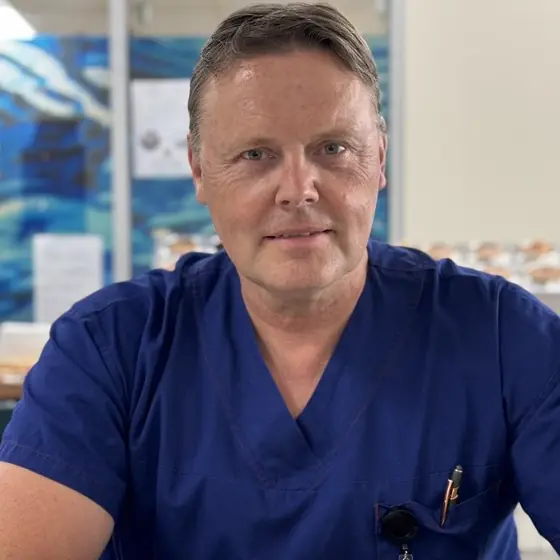
Dr Gert TollessonNeurosurgeon, Brisbane
Ready to talk it through?
A current referral is needed to book. If you do not have one yet, call the rooms on (07) 3870 3708 and they will explain what to ask your GP for.
Request a consultation
Send your details and the rooms will call you to arrange a time. Referrals are triaged as they arrive.
Monday to Friday, 8:30am to 4:30pm. No referral yet? The rooms will explain what to ask your GP for.
Before your appointment
What happens from referral to follow-up, and what it costs.