Pituitary tumours
Growths in the small gland at the base of the brain that regulates the body’s hormones. Nearly all are benign. They cause trouble by making too much of a hormone, too little, or by pressing on the nerves to the eyes.
Greenslopes Private Hospital, Brisbane
Watkins Medical Centre, Spring Hill, or telehealth
A current GP or specialist referral is needed
At a glance
Pituitary adenoma (functioning or non-functioning), Rathke’s cleft cyst, craniopharyngioma.
Nearly all benign.
MRI of the pituitary, hormone blood tests, visual field testing.
An endocrinologist is involved from the start.
Medication, endoscopic surgery through the nose, radiotherapy, or monitoring.
Prolactinomas are usually treated with tablets.
Greenslopes Private Hospital (adults).
Queensland Children’s Hospital (children).
What a pituitary tumour is
The pituitary is the size of a pea and sits in a bony pocket behind the bridge of the nose, directly beneath the nerves that carry vision. Its hormones control the thyroid, adrenal glands, growth, fertility and water balance.
Most pituitary tumours are adenomas, benign growths of the gland’s own cells. Functioning adenomas make a hormone in excess: prolactin most commonly, growth hormone (causing acromegaly) or ACTH (causing Cushing’s disease). Non-functioning adenomas make nothing useful and cause problems only by their size, pressing on the normal gland or on the optic nerves above it.
Adenomas smaller than a centimetre are called microadenomas and are often found by chance; larger ones are macroadenomas. Other growths in the same region include Rathke’s cleft cysts and, less commonly, craniopharyngiomas, which are treated in a similar way but planned differently.
Because hormones are involved, an endocrinologist is part of the team from the first appointment. Some tumours are treated entirely with medication, and for the rest, hormone testing before and after surgery is as important as the scan.
Symptoms
Symptoms come from pressure, from hormone excess, or from hormone deficiency, and they often develop so slowly that they are put down to something else.
- Loss of vision at the outer edges of both eyes, or blurred vision
- Headache, often behind the eyes or at the front of the head
- Milk production, irregular or absent periods, or reduced fertility (prolactin)
- Enlargement of the hands, feet and facial features (growth hormone)
- Weight gain, easy bruising, rounded face and high blood pressure (ACTH)
- Tiredness, low mood, loss of libido, or excessive thirst from a gland that is under-producing
A sudden severe headache with vision loss or double vision can mean bleeding into the tumour (pituitary apoplexy). This is an emergency: call 000 or go to an emergency department.
How it is diagnosed
An MRI of the pituitary region shows the tumour and whether it touches the optic nerves. Blood tests measure each of the gland’s hormones, and formal visual field testing records what the eyes can and cannot see. Together they decide whether treatment is needed, and whether it should start with tablets or with surgery.
The scan is on the screen, the options are set out on equal terms, and nothing is booked until you have had time to think.
Treatment options
The hormone result often decides the first step. A prolactinoma usually shrinks with medication; most other tumours that need treatment are removed through the nose.
- MedicationTablets such as cabergoline shrink most prolactin-secreting tumours without surgery. Some growth hormone tumours also respond to medication, before or after an operation. Prescribed and monitored by the endocrinologist.
- Endoscopic surgeryThe tumour is removed through the nostril with an endoscope, working with an ENT surgeon, so there is no external incision. Neuronavigation guides the approach. This is the usual operation for a tumour pressing on vision or making excess hormone that medication cannot control.
- MonitoringInterval MRI and hormone tests for small non-functioning tumours that are not touching the optic nerves. Many never need treatment.
- RadiotherapyRadiosurgery or a fractionated course for tumour that remains or regrows after surgery, planned with a radiation oncologist. The effect on hormone levels is gradual.
- Hormone replacementWhere the gland under-produces, before or after treatment, the missing hormones are replaced with tablets or injections under the endocrinologist’s care.
Not every option applies to every person. Which ones apply to you, and in what order, is explained at the consultation and confirmed in writing before anything is booked.
Recovery and follow-up
Recovery from endoscopic surgery is usually quicker than from a craniotomy. The nose, the hormones and the eyes are each followed up.
A hospital stay of two to four days is usual. The nose feels blocked for a few weeks, and nose-blowing, straining and flying are avoided for a period to protect the repair. Fluid balance is watched closely in the first days, because the gland can temporarily under-produce the hormone that controls thirst and urine output.
Hormone levels are checked in the weeks after surgery and reviewed by the endocrinologist. Vision, where it was affected, is reassessed once the swelling has settled. An MRI is done at about three months to establish a new baseline, then at intervals.
Working with the endocrinologist
Pituitary care is shared. The endocrinologist manages hormones and medication over the long term; the rooms manage the surgical side and the scans. Letters go to both, and to your GP.
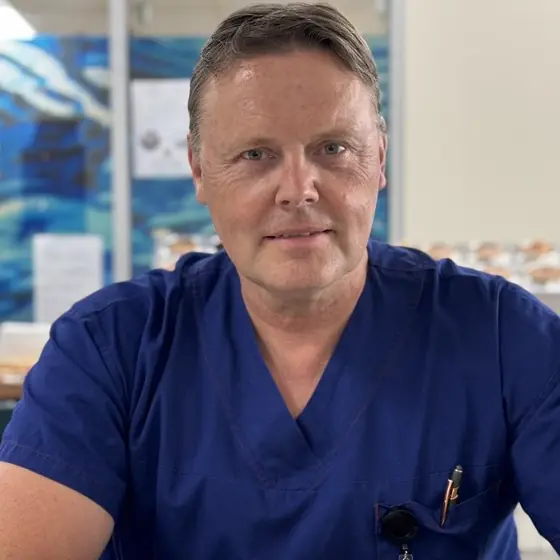
Dr Gert TollessonNeurosurgeon, Brisbane
Ready to talk it through?
A current referral is needed to book. If you do not have one yet, call the rooms on (07) 3870 3708 and they will explain what to ask your GP for.
Request a consultation
Send your details and the rooms will call you to arrange a time. Referrals are triaged as they arrive.
Monday to Friday, 8:30am to 4:30pm. No referral yet? The rooms will explain what to ask your GP for.
Before your appointment
What happens from referral to follow-up, and what it costs.