Treatments and procedures
Surgery is one option among several. Sometimes the right answer is monitoring with scans, sometimes a small procedure, sometimes a larger operation. Each page explains what the treatment does, what it involves, the usual recovery and the alternatives.
Greenslopes Private Hospital, Brisbane
Watkins Medical Centre, Spring Hill, or telehealth
A current GP or specialist referral is needed
At a glance
Six
From interval scans to a craniotomy, one page each.
Microscope and navigation
With 5-ALA, awake and endoscopic surgery where they help.
Always discussed
Including the option of doing nothing, on equal terms with surgery.
In writing
Risks and costs confirmed before a date is set.
Six ways a condition can be treated
The condition decides the treatment, not the other way around. Your condition page says which of these usually apply; the treatment page says what each one involves.
Craniotomy for tumours
The standard operation for most brain tumours: a section of skull is temporarily removed under general anaesthetic, the tumour is treated under the operating microscope with neuronavigation, and the bone is replaced.
Endoscopic and pituitary surgery
Pituitary and some skull base tumours reached through the nostril with an endoscope, so there is no external incision. Endocrinology and ENT colleagues involved before and after.
Aneurysm and vascular surgery
Clipping under the microscope, or coiling and stenting through a catheter with an interventional neuroradiology colleague. AVMs and cavernomas removed, embolised or treated with focused radiation.
Shunts and hydrocephalus surgery
A thin tube with a valve that drains excess cerebrospinal fluid from the brain to the abdomen. Overnight pressure monitoring where the diagnosis is uncertain; cyst fenestration where a cyst is the cause.
Microvascular decompression
For trigeminal neuralgia or hemifacial spasm that medication no longer controls: the blood vessel pressing on the nerve is lifted away through a small opening behind the ear.
Monitoring and non-surgical options
Interval scans, medication, radiosurgery and endovascular procedures, discussed on equal terms with surgery. Many conditions are managed without an operation.
How operations are planned and performed
The techniques below are used across most of the operations on this site. They are described once here rather than repeated on every page.
- MicroscopeOperations are performed under an operating microscope, which magnifies and lights the surgical field so that normal tissue can be told from abnormal and protected
- NeuronavigationYour own MRI is loaded into a navigation system that shows where the instruments are in relation to the tumour and to important structures, in real time
- 5-ALAFor malignant gliomas, a fluorescent dye taken before surgery makes tumour tissue glow under a special microscope filter, helping the surgeon see where it ends
- Awake surgeryFor tumours near speech or movement areas, part of the operation can be done with the patient awake so that those functions can be tested as the tumour is removed
- EndoscopyFor pituitary tumours and some others, a thin telescope through the nostril or a keyhole opening replaces a larger incision
- ColleaguesInterventional neuroradiology, radiation oncology, medical oncology, endocrinology and ENT colleagues are part of planning where the condition calls for it
Which techniques apply to your operation, and why, is explained at the consultation and confirmed in writing before surgery.
Planning is done on your own imaging, and the operation is only booked once you have had time to think.
Risks, benefits and the alternative of doing nothing
Every operation carries risk. What matters is how that risk compares with the risk of the condition itself, and with the other options, in your particular case.
The general risks of brain surgery include infection, bleeding, seizures, stroke, problems related to the anaesthetic, and, depending on where the operation is, effects on movement, sensation, speech, vision or thinking. The specific risks for your operation depend on the condition, its position and your general health, and they are discussed with you at the consultation, not only listed on a form.
The same conversation covers what happens if nothing is done, because that is also a choice with consequences. Outcomes vary from person to person, and no outcome can be guaranteed. What can be promised is that you will have the information you need to decide, in writing, before a date is set.
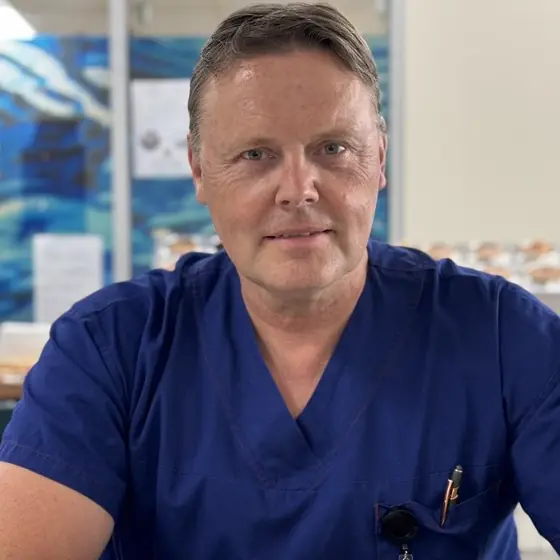
Dr Gert TollessonNeurosurgeon, Brisbane
Which of these applies to you?
Start with your condition page, or call the rooms and they will point you to the right one.
Request a consultation
Send your details and the rooms will call you to arrange a time. Referrals are triaged as they arrive.
Monday to Friday, 8:30am to 4:30pm. No referral yet? The rooms will explain what to ask your GP for.
Before your appointment
What happens from referral to follow-up, and what it costs.