Aneurysm and vascular surgery
Aneurysms are treated with a clip placed across the neck of the aneurysm under the microscope, or with coils or a stent delivered through a catheter by an interventional neuroradiology colleague. AVMs and cavernomas are removed, blocked or treated with focused radiation, depending on their size and position.
Greenslopes Private Hospital, Brisbane
Watkins Medical Centre, Spring Hill, or telehealth
A current GP or specialist referral is needed
At a glance
A craniotomy; a small titanium clip closes the aneurysm from outside the artery.
Through a catheter from the groin or wrist; no incision on the head.
Coiling: one to three days. Clipping or AVM surgery: five to ten days.
Greenslopes Private Hospital, with interventional neuroradiology on site.
What the options involve
The choice between clipping and coiling is made on the shape, size and position of the aneurysm, your age and health, and whether it has bled. Both are discussed with you, and in many cases both are reasonable.
Clipping is an open operation. Through a craniotomy, usually behind the hairline, the artery is followed under the microscope to the aneurysm and a small spring clip is placed across its neck so that blood can no longer enter it. The clip stays permanently. A fluorescent dye and a small ultrasound probe confirm that the artery is still flowing and the aneurysm is closed before the operation is finished.
Coiling is done from inside the artery. Under general anaesthetic, an interventional neuroradiologist passes a fine catheter from the groin or wrist up to the aneurysm and packs it with soft platinum coils until blood clots within it. Stents or flow-diverting devices are used for aneurysms with wide necks or awkward shapes, and need blood-thinning tablets for a period afterwards. Dr Tollesson and the neuroradiologist plan these cases together.
For an AVM, treatment is often staged: embolisation to shrink it, followed by microsurgical removal through a craniotomy, or radiosurgery for small deep AVMs that are hard to reach. Cavernomas that need treatment are removed through a craniotomy, using neuronavigation to reach them with as little disturbance to the brain as possible. Moyamoya disease is treated with a bypass, in which a scalp artery is joined to the surface of the brain.
Before and during the procedure
For a planned, unruptured aneurysm there is time to prepare. A ruptured aneurysm is treated as an emergency, usually within a day or two of the bleed.
- A catheter angiogram or CT angiogram to map the aneurysm in detail, and a discussion of the results of both options as they apply to you
- Blood-thinning medication stopped before clipping, or started before stenting, on specific instructions
- Fasting from midnight; admission on the day of the procedure
- For clipping: a small area of hair clipped along the incision; the first night in intensive care
- For coiling: a small puncture in the groin or wrist, kept flat for a few hours afterwards
- Your next of kin is telephoned after the procedure
After a bleed
A subarachnoid haemorrhage is treated in hospital under the care of the neurosurgical and intensive care teams. The aneurysm is secured as soon as is safe, and the following two weeks are spent in hospital watching for spasm of the brain’s arteries and for hydrocephalus, both of which are treated if they occur. Recovery from the bleed itself takes longer than recovery from the procedure.
Planning is done on your own imaging, and the operation is only booked once you have had time to think.
Recovery and risks
Recovery after coiling is short. After clipping or AVM surgery it follows the pattern of any craniotomy.
After coiling, most people are home within a few days with a bruise at the puncture site and some tiredness, and back to usual activity within a couple of weeks. After clipping, the stay is about a week, with headache and fatigue for several weeks and a gradual return to work over one to two months. Driving restrictions apply after any craniotomy and after a bleed.
Follow-up imaging is part of both treatments. Clipped aneurysms are checked once with an angiogram or CT angiogram and rarely need further scans. Coiled aneurysms are checked with MR angiography at intervals, usually at six months and then yearly for a period, because coils can compact and occasionally need topping up. After AVM removal, an angiogram confirms that nothing remains; after radiosurgery, scans continue until the AVM has closed, which takes two to three years.
Risks that are discussed with you
- Stroke from a blocked or damaged artery during either procedure, causing weakness, speech or vision problems
- Bleeding from the aneurysm during treatment
- For clipping: the general risks of a craniotomy, including infection, seizures and a fluid leak
- For coiling: bruising or damage at the puncture site, a reaction to the contrast dye, and the possibility of the aneurysm refilling
- For stents: clot on the stent, and the bleeding risk of the blood-thinning tablets needed afterwards
- For AVMs: bleeding or swelling in the brain around the malformation after treatment
- Not every aneurysm can be completely closed with the first treatment
Every operation carries risks, and the risks of brain surgery are discussed with you in detail, in person, before you decide. The list here is general and is not a substitute for that conversation.
Alternatives
Many aneurysms found by chance are not treated at all, at least at first.
- ObservationSmall unruptured aneurysms in low-risk positions are often watched with MR angiography at intervals, with attention to blood pressure and smoking, which affect the risk of growth.
- The other procedureWhere both clipping and coiling are reasonable, the choice is discussed on its merits; neither is presented as the default.
- RadiosurgeryFor small AVMs, particularly deep ones, focused radiation closes the vessels over two to three years without an operation.
- Embolisation aloneFor a minority of AVMs, catheter treatment can close the malformation without surgery.
Which of these applies to you depends on your condition and your circumstances. The alternatives are set out at the consultation on equal terms with surgery, and nothing is booked until you have had time to think.
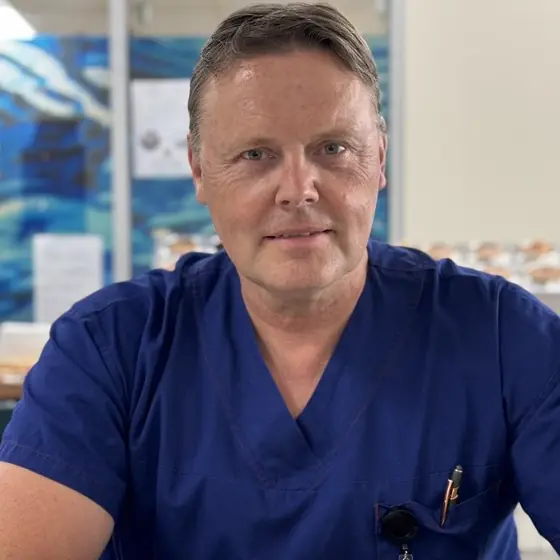
Dr Gert TollessonNeurosurgeon, Brisbane
Ready to talk it through?
A current referral is needed to book. If you do not have one yet, call the rooms on (07) 3870 3708 and they will explain what to ask your GP for.
Request a consultation
Send your details and the rooms will call you to arrange a time. Referrals are triaged as they arrive.
Monday to Friday, 8:30am to 4:30pm. No referral yet? The rooms will explain what to ask your GP for.
Before your appointment
What happens from referral to follow-up, and what it costs.